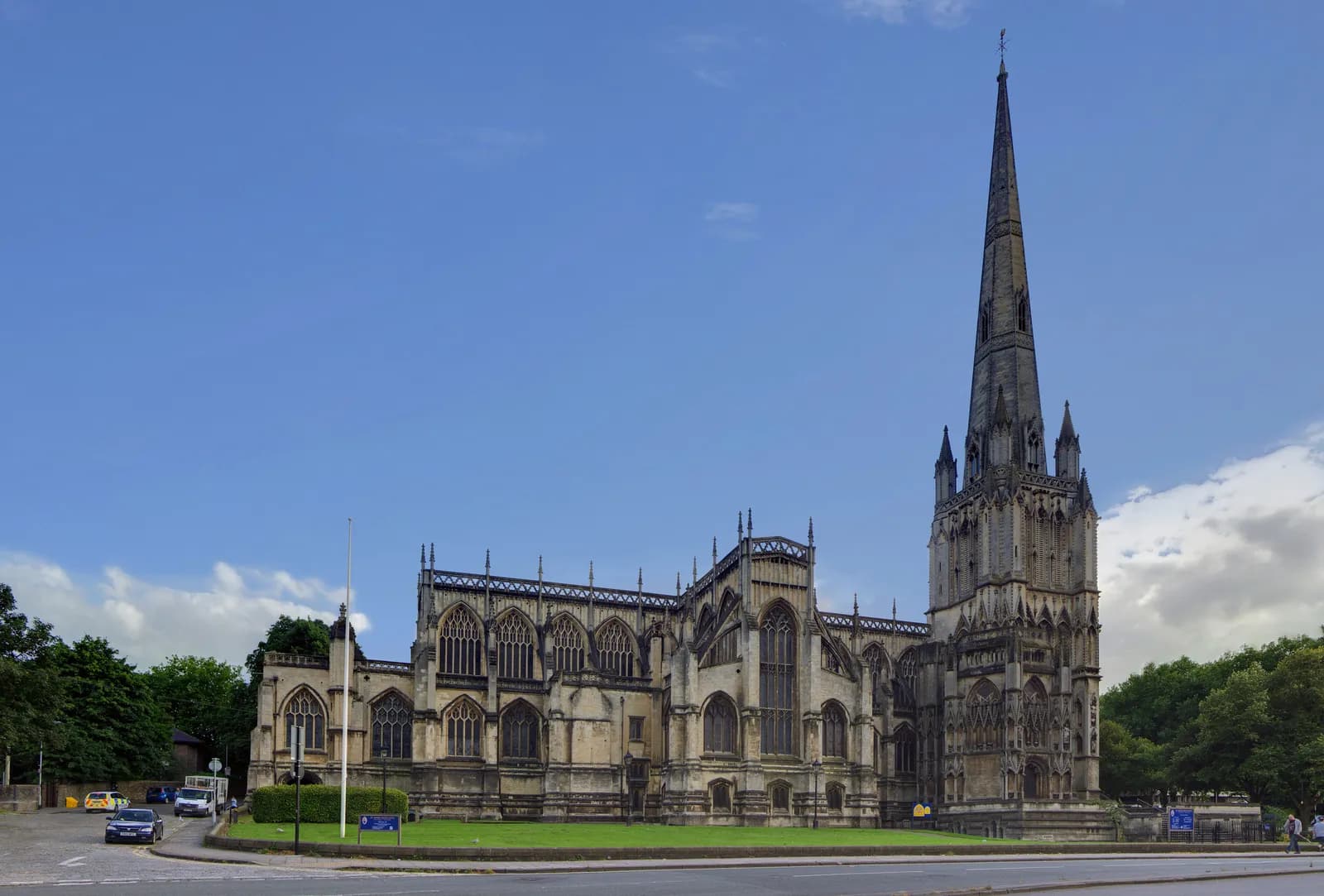
Rising above the red sandstone cliffs of Bristol's harbourside, St Mary Redcliffe commands attention from across the city. Its 84-metre spire, the second-tallest structure in Bristol, has been a landmark for mariners and merchants since the medieval period.
The Royal Quote That Made History
Queen Elizabeth I is said to have described St Mary Redcliffe as "the fairest, goodliest and most famous parish church in England" during her visit in 1574. The attribution remains a matter of historical debate, yet the phrase has defined the church's reputation for four centuries. Elizabeth returned several times during her reign, notably in 1588 and 1591, and later restored funds to the church through Letters Patent in 1588 and 1591.
The monarch was not alone in her admiration. Charles I echoed similar praise in 1628, calling it "one of the moste famous absolute fayrest and goodliest parish churches within the Realm of England." Earlier still, the antiquary John Leland wrote in 1541 that it was "the most beautiful of all churches" he had encountered in England.
Built by Merchants, Not Monarchs
Unlike cathedrals raised by bishops or royalty, St Mary Redcliffe was constructed by Bristol's wealthy merchant class. The church takes its name from the red sandstone cliffs above the River Avon where the original Port of Bristol stood; fragments of that red cliff remain visible near Redcliffe Quay today.
The first recorded mention dates to 1158, when Henry II confirmed churches at Redcliffe and Bedminster to Old Sarum Cathedral. Construction of the present building began in earnest in 1294 under Mayor Simon de Burton. The Early English Gothic north porch, built in 1185, ranks among the earliest Gothic constructions in England.
No patron proved more significant than William II Canynges (c. 1399–1474). The five-time Mayor of Bristol and three-time MP for the city owned a fleet of at least ten ships employing 800 sailors. His vessels, including the 900-ton Mary and John and the 500-ton Mary Redcliffe, traded across Europe. Canynges maintained 100 workmen and financed the completion of the nave and crossing around 1480. After his wife's death in 1467, he took holy orders and was buried in the church upon his death in 1474. Visitors can still see his two effigies: one in mayoral robes, the other in canonical vestments.
Architectural Distinction
St Mary Redcliffe spans 250 feet in length and 117 feet across its transepts, covering 1,916 square metres. The spire reaches 274 feet to the weathervane, making it the sixth-tallest parish church in England. Grade I listed since 1959, the building displays Early English, Decorated, and Perpendicular Gothic styles alongside Victorian Gothic Revival elements.
Among its rare features is the hexagonal outer north porch, constructed in 1325. Only three medieval hexagonal porches survive in England. The porch contains a centralised tierceron vault and intricate seaweed foliage decoration. Flying buttresses, massive stained glass windows, and decorative stone vaults appear throughout.
Architecture critic Simon Jenkins awarded St Mary Redcliffe the maximum five-star rating in England's Thousand Best Churches, one of only 18 churches nationally to receive this distinction. Nikolaus Pevsner wrote that the church "need not fear comparison with any other English parish church."
A History of Destruction and Renewal
The church has survived centuries of damage. Lightning struck the spire in 1445 or 1446, destroying its upper two-thirds. The structure remained a stump for over 400 years until reconstruction in 1872.
The Civil War brought further destruction between 1649 and 1660. Pinnacles were removed, ornaments destroyed, the organ broken, and stained glass smashed by artillery fire. The chantry chapels dissolved in 1547, and crown agents confiscated plates, lamps, and vestments.
The Victorian era brought salvation. Architect George Godwin led a restoration from 1842 to 1872 costing over £40,000, equivalent to approximately £3.4 million today. The east window was unblocked and reglazed; high box pews and Georgian galleries were removed. On 9 May 1872, the Mayor of Bristol placed the capstone on the rebuilt spire.
During the Second World War, watchmen stationed themselves on the roof while the bells were stored under the floor in sandbags from 1941 to 1944. The church emerged largely unscathed from the bombing that devastated much of Bristol.
Modern Times and Contemporary Reckoning
St Mary Redcliffe remains an active Church of England parish within the Broad Church tradition. A café operates on site, and visitors can access free digital guides and virtual tours.
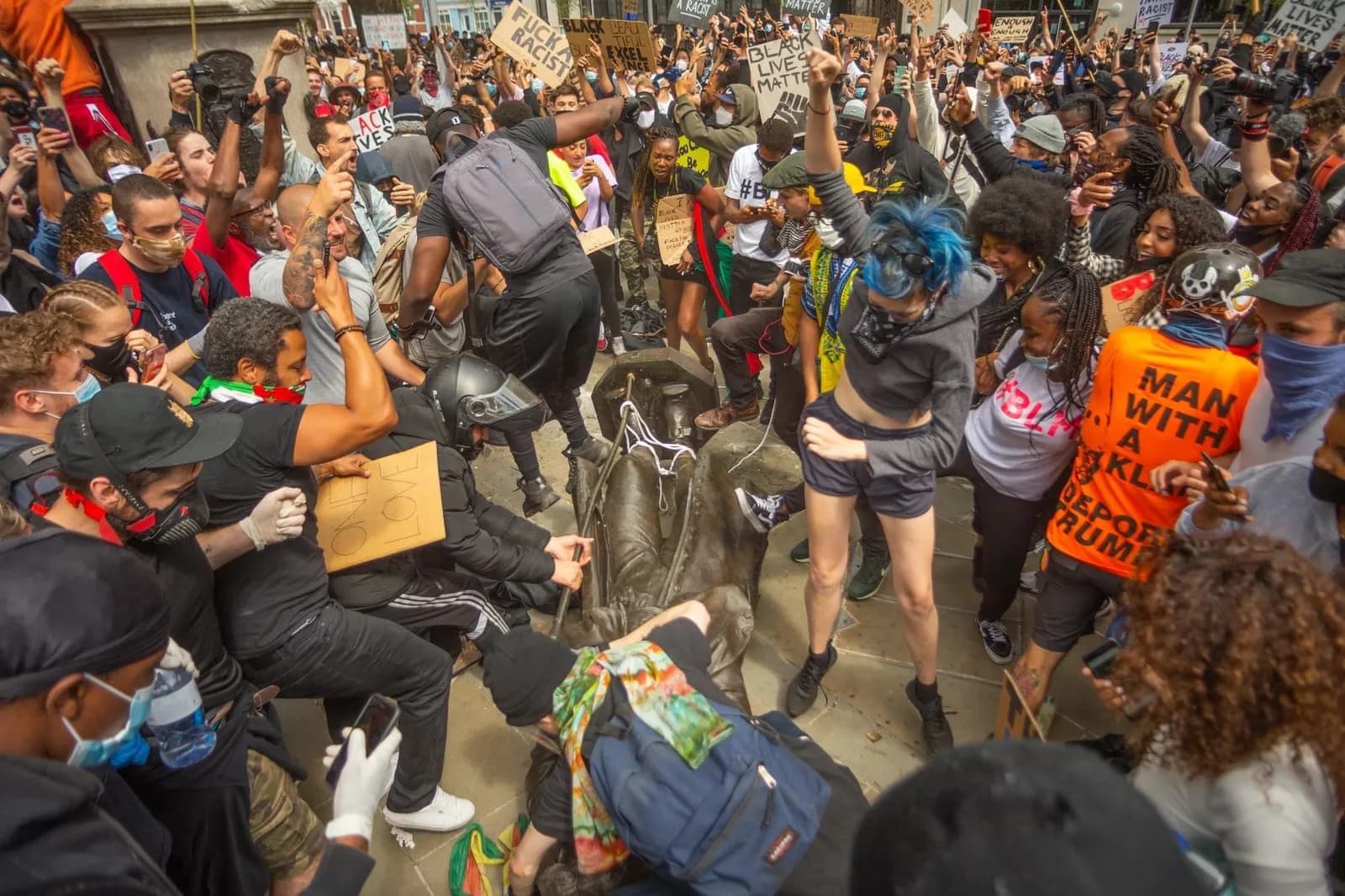
In 2020, the church removed stained glass commemorating the Royal African Company following the removal of the Edward Colston statue. This action formed part of Bristol's broader reckoning with its role in the transatlantic slave trade.
The church is currently marking the 450th anniversary of Elizabeth I's visit through Project 450. Plans include a new welcome centre and the pedestrianisation of Redcliffe Way, though as of 2023, no construction work had commenced.