A Bristol Upbringing
Mary Carpenter was born on 3 April 1807 in Exeter, the daughter of Lant Carpenter, a prominent Unitarian minister and educator. When she was ten years old, the family moved to Bristol in 1817 after her father was appointed to lead the Lewin's Mead Unitarian meeting house.
At her father's boarding school on Great George Street, Brandon Hill, Mary received an education unusual for a girl of her era. The curriculum included sciences, mathematics, Greek, and Latin. She later taught in the school and worked as a governess on the Isle of Wight and in Hertfordshire before returning to Bristol in 1827 to become head teacher of Mrs Carpenter's Boarding School for Young Ladies.
The Turning Point
A pivotal moment came in 1833 when Mary met the Indian reformer Ram Mohan Roy and the American Unitarian minister Joseph Tuckerman. Tuckerman made a remark that would alter the course of her life: when seeing a ragged child, he said, "That child should be followed to his home and seen after." This observation sparked Carpenter's lifelong commitment to the welfare of destitute children.
Following her father's death in 1840 and the closure of the family school in 1848, Carpenter devoted herself entirely to educational and charitable work. She established a ragged school in Lewin's Mead, Bristol, providing basic education to children who would otherwise have received none.
The Book That Changed Policy
In 1851, Carpenter published Reformatory Schools for the Children of the Perishing and Dangerous Classes, and for Juvenile Offenders. The book's title alone was designed to shock the Victorian conscience. She followed this with Juvenile Delinquents, their Condition and Treatment in 1853.
These publications proved influential. Her evidence to House of Commons Select Committees, combined with her written work, contributed directly to the passing of the Juvenile Offenders Act 1854. This legislation marked a turning point in how Britain treated young offenders, moving away from punitive measures towards rehabilitation.
Carpenter became the first woman to have a paper published by the Statistical Society of London and the first woman to read a paper at a British Association meeting, which she did at Oxford in 1860 on the subject of free day schools and government grants for education.
The Red Lodge Transformation
In 1854, Lady Byron, widow of the poet, purchased the Red Lodge on Park Row using funds from Lord Byron's endowment. She presented the building to Mary Carpenter to establish a reformatory school for girls.
The Red Lodge itself was a remarkable building. Originally constructed between 1579 and 1580 for Sir John Young, a courtier to Henry VIII and Elizabeth I, it was completed in 1590 by Dame Joan Young. The building featured the Great Oak Room, described by architectural historians as "one of the finest rooms in the West Country," with its original Tudor oak panelling, moulded plaster ceiling, and distinctive "double-decker" fireplace.
When Lady Byron died in 1860, she left Mary Carpenter a legacy that allowed her to purchase the Red Lodge outright, together with a cottage for training girls in domestic service.
The Girls' Reformatory
The Red Lodge Reformatory operated from 1854 until 1917, providing a home and education for girls who had fallen into criminal behaviour or were deemed "in danger" of doing so. Carpenter's approach was revolutionary for its time: she believed in treating the causes of delinquency rather than merely punishing the symptoms.
Her philosophy was captured in a quote from her 1851 book: "Love must be the ruling sentiment of all who attempt to influence and guide these children."
Carpenter's diaries, now held at Bristol Archives, record the early days at the Red Lodge in vivid detail. They describe discovering a human foot in an outhouse, and document the use of cells in the cellar for disciplining "violent, refractory and noisy girls." This more punitive aspect of her regime reflects the Victorian attitudes of the era, even as her overall approach was considered progressive.
A Network of Reform in Bristol
The Red Lodge was not Carpenter's only contribution to Bristol's educational landscape. In 1852, she established a reformatory school at Kingswood in premises originally set up by John Wesley. Initially admitting both boys and girls, it eventually became a boys-only institution.
In 1858, she opened the Park Row Industrial School for boys, which became the first certified institution of its kind under the Industrial Schools Act 1857. This legislation, which Carpenter had campaigned for, allowed magistrates to send destitute children to industrial schools rather than workhouses.
A Global Reformer with Bristol Roots
Despite her extensive international work, Bristol remained Carpenter's base throughout her life. She visited India three times, in 1866, 1868, and 1875, establishing the National Indian Association in 1870 to promote female education in India. She also toured America in 1873, meeting the abolitionists William Lloyd Garrison and Frederick Douglass.
She remained active in local Bristol affairs until the end of her life. In 1877, she appeared on a public platform in Bristol to support the Bristol and West of England Society for Women's Suffrage.
Death and Legacy
Mary Carpenter died on 14 June 1877 at the Red Lodge, the building that had been both her home and the centre of her reform work for more than two decades. She was buried at Arnos Vale Cemetery in Bristol.
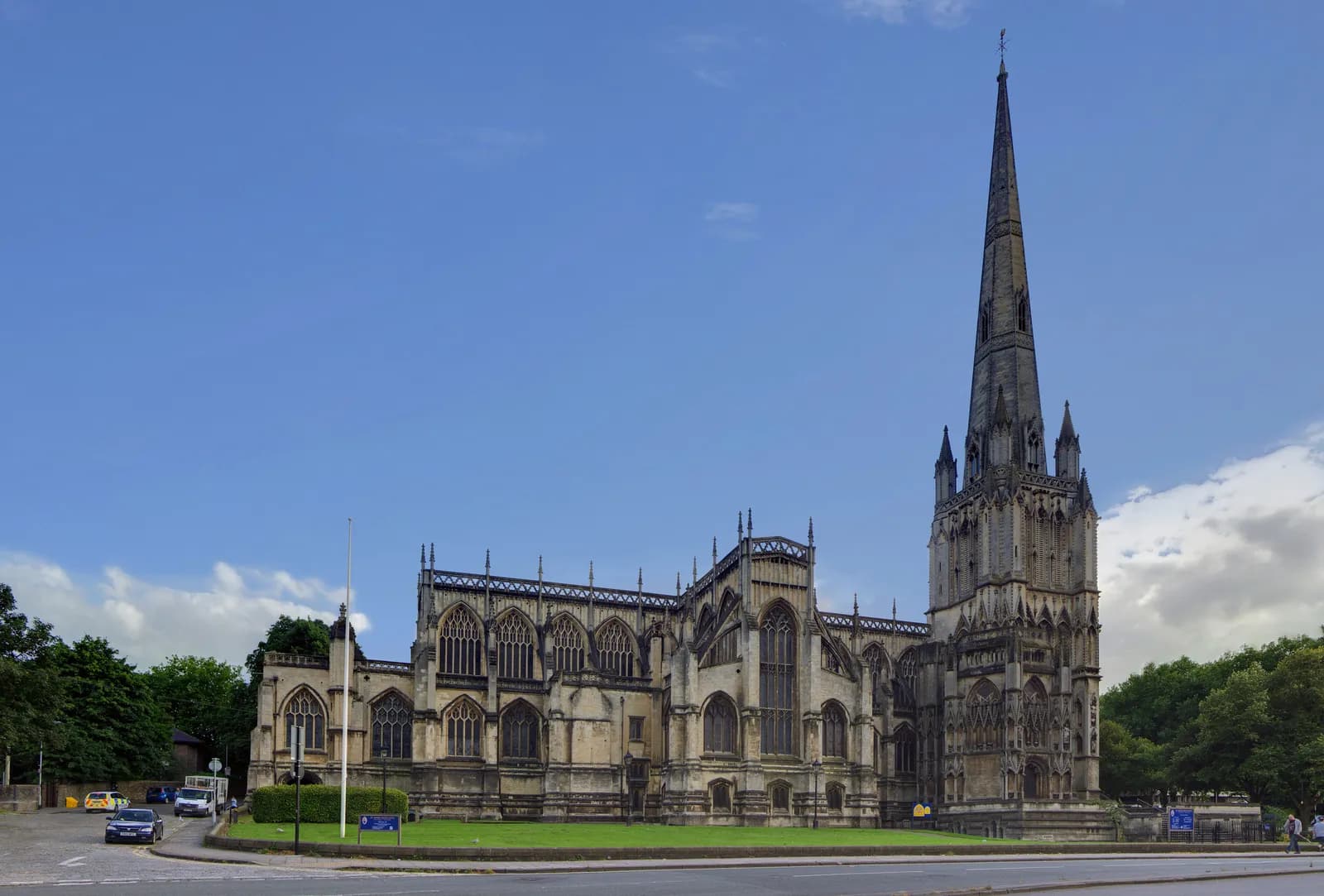
A public meeting in October 1877 raised £2,700 for her reform schools and for a memorial in Bristol Cathedral, where a memorial to her now stands in the north transept. A blue plaque marks the Red Lodge on Park Row.
The Red Lodge Today
The Red Lodge Reformatory closed in 1918, but the building survived. In 1919, James Fuller Eberle purchased it on behalf of the Bristol 1904 Arts society and Bristol Corporation, saving it from being dismantled and sold piecemeal.
After renovation in 1920 and 1956, the Red Lodge opened as a museum. Today it is managed by Bristol City Council as part of the Bristol Museums group. The museum is free to visit and features the Mary Carpenter Room, which displays her Broadwood piano, bought in 1845, and a painting of Carpenter with her first pupil. The Great Oak Room and an Elizabethan knot garden, created in the 1980s based on designs from the bedroom ceiling, are also open to visitors.
Carpenter's papers are held by Bristol Archives, providing researchers with access to her diaries, correspondence, and the records of the Red Lodge school. Her legacy continues to influence thinking about child welfare and juvenile justice, demonstrating how one woman's determination, rooted in Bristol, could reshape national policy and transform countless young lives.