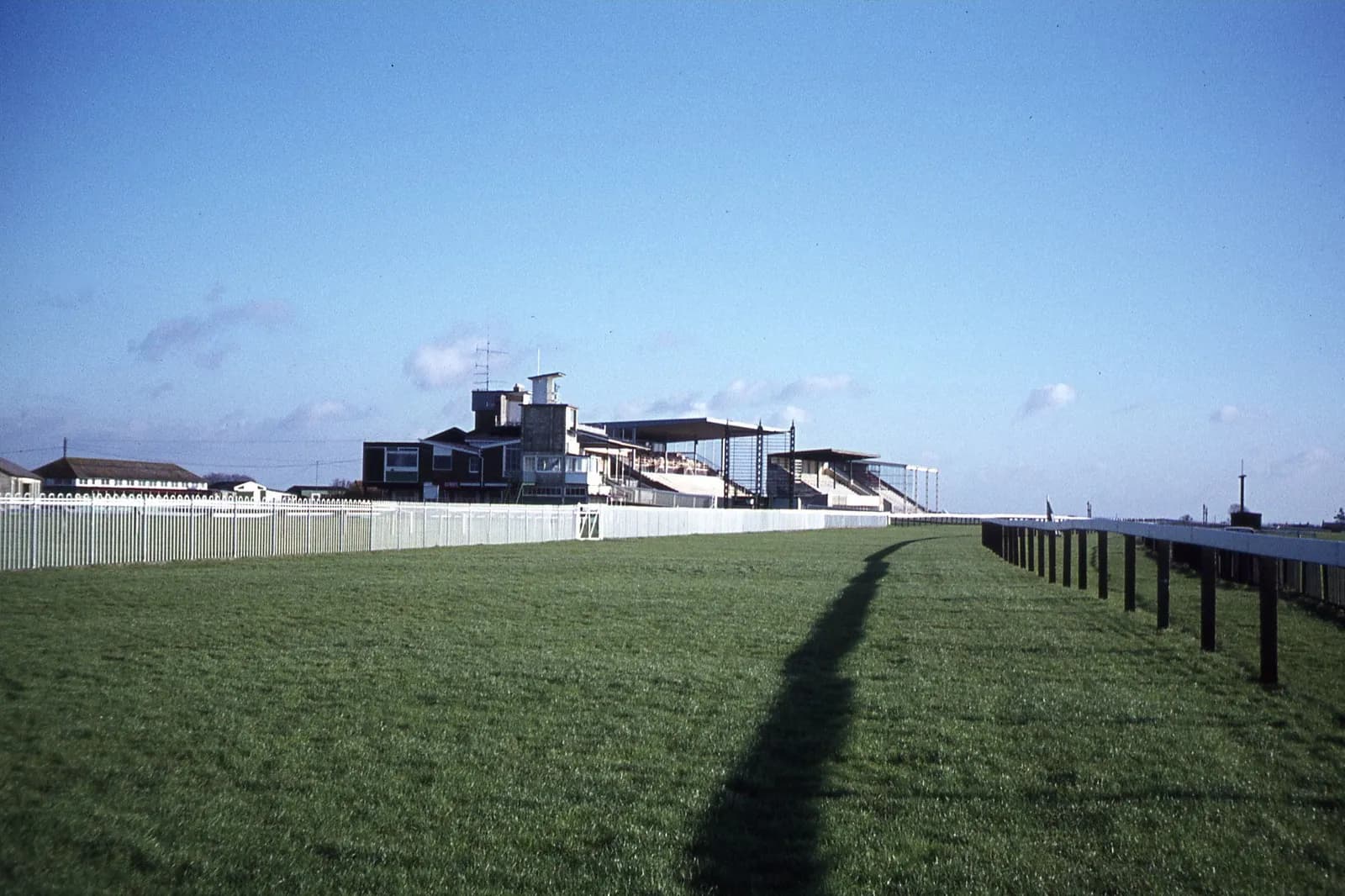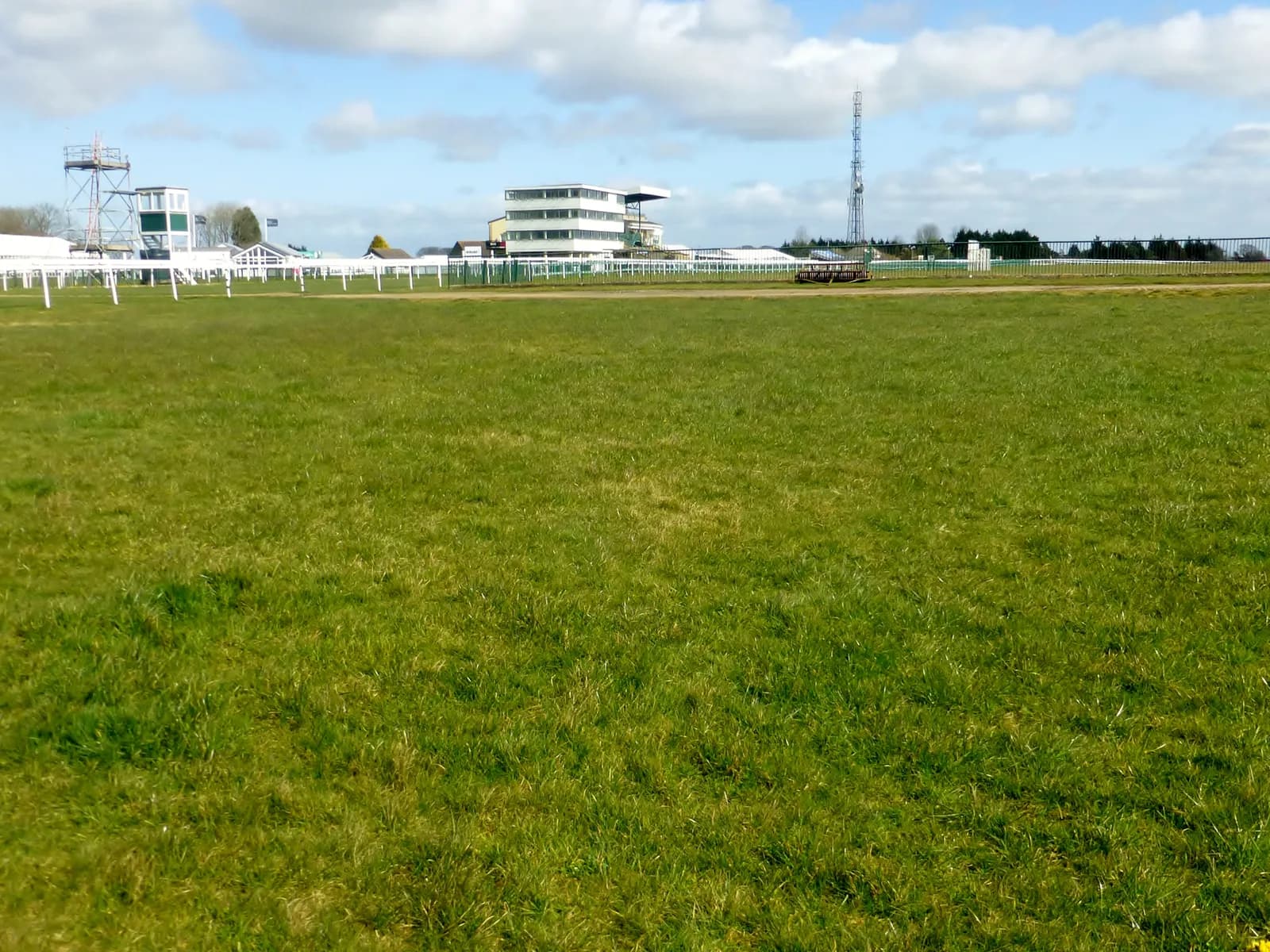
Bristol sits between two racecourses that could hardly be more different.
Head east and Bath Racecourse sits high above the city on Lansdown Hill, 780 feet above sea level and the highest Flat racecourse in Britain.
Head west, cross the Severn and Chepstow winds through the old parkland of Piercefield above the Wye Valley.
This October, the calendar brings the two together particularly neatly.
Bath races on Thursday 8th October.
The very next day, Chepstow begins three consecutive days of its Welsh Racing Festival.
That means someone starting from Bristol could, at least in theory, watch live racing on four straight days from Thursday 8th to Sunday 11th October without travelling particularly far.
And there has been an important late change to what racegoers will see at Chepstow.
After the exceptionally dry weather, the chase course has not recovered sufficiently for the festival. All three days will now consist entirely of hurdle races, with the scheduled steeplechases moved elsewhere.
Six October days to choose from
Bath has three Flat meetings remaining this year:
Thursday 8th October
Monday 19th October
Thursday 29th October, the Season Finale
Chepstow's DragonBet Welsh Racing Festival runs:
Friday 9th October
Saturday 10th October
Sunday 11th October
Friday has become particularly strong following the programme changes.
The opening afternoon now features both the Grade 2 Persian War Novices' Hurdle and the £50,000 Welsh Champion Hurdle.
Saturday is headed by the Silver Trophy Handicap Hurdle.
Sunday brings the festival to a close with another seven races over hurdles.
For Bristol racegoers, it makes the second week of October one of the easiest opportunities of the year to compare two very different sides of British racing.
Start on top of Lansdown Hill
Bath Racecourse's position is part of what makes it distinctive.
At 780 feet above sea level, it is Britain's highest Flat racecourse.
On a clear day the elevated position gives wide views across the surrounding countryside. On a less forgiving October afternoon, it also explains why bringing another layer is usually sensible.
Racing around Bath itself stretches back to the eighteenth century.
The city's early meetings moved around before racing resumed on Lansdown in 1811 with the support of landowner Frances Blathwayt.
One detail in the history is worth clarifying.
The 1811 meeting was not actually on the precise racecourse used today. That course stood closer to Beckford's Tower and Weston Lane.
Racing moved to the present site in 1831.
So although Bath Racecourse traces its modern history to 1811, the horses have been running around the current piece of Lansdown for just under two centuries.
The Somersetshire Stakes became one of the important early races, while the course itself continued to change with the times.
During the Second World War, racing stopped and the land was used by the military.
Today it is a very different place, but its height, exposed position and unusual shape still give Bath a character of its own.
A racecourse where the finish matters
Bath is left-handed and far from flat despite being a Flat racing course.
Its long home straight rises towards the finish.
There is also a tight turn before horses enter that straight, so getting into a useful position can matter.
A runner that has spent too much energy early can suddenly find the final climb much harder than it looked.
That makes October particularly interesting.
These are the closing weeks of a long Flat season. Some horses have been racing since spring, while others may be trying to squeeze in another win before their winter break.
Ground conditions matter too.
Bath has no artificial watering system capable of transforming the entire course, and after a particularly dry year it is worth checking the official going before travelling.
The first October card takes place on Thursday 8th October, followed by racing on Monday 19th.
Then, on Thursday 29th October, Bath stages its final raceday of 2026.
The Season Finale is currently scheduled as a seven-race afternoon card, bringing racing on Lansdown to an end until next spring.
Then cross the Severn
Less than 24 hours after Bath's first October fixture, attention switches to Chepstow.
The racecourse is celebrating its centenary in 2026.
Racing began on the present site in the summer of 1926 after a group of South Wales businessmen acquired part of the Piercefield estate and set about building a major new racecourse.
Around 20,000 people attended the inaugural meeting.
Chepstow later became home to one of the defining events in Welsh sport.
The Welsh Grand National moved there in 1949 after previously being staged elsewhere in South Wales, including Cardiff.
It has remained at Chepstow ever since.
Over the decades the race has produced horses that went on to considerably greater things.
Burrough Hill Lad won the Welsh National in 1983 before taking the Cheltenham Gold Cup the following spring.
Native River won at Chepstow in 2016 and went on to win the Cheltenham Gold Cup in 2018.
This October, however, the fences will remain unused.
Why Chepstow's festival has changed
The prolonged dry spell has affected jump racing across Britain.
At Chepstow, officials concluded that the chase course could not be prepared to a suitable standard in time for the Welsh Racing Festival.
The solution was not to abandon the festival.
Instead, the British Horseracing Authority reorganised the programme.
All three Chepstow cards from Friday 9th to Sunday 11th October will now be hurdle-only meetings.
The affected steeplechases have been moved to Worcester and Ffos Las, where suitable chasing ground can be provided.
For racegoers, it means the festival survives almost intact, but it will look rather different from usual.
Friday is now the big one
The revised programme has made Friday 9th October especially interesting.
The Persian War Novices' Hurdle remains one of the headline races.
Named after the great three-time Champion Hurdle winner Persian War, it has a reputation for identifying horses capable of progressing to much bigger prizes.
Silviniaco Conti, Blaklion and Thyme Hill are among its previous winners.
This year it is joined on Friday by the Welsh Champion Hurdle.
The Welsh Champion Hurdle has itself travelled around Wales.
It was first run at Chepstow in 1969 and attracted some outstanding hurdlers during its early years.
Bula, Night Nurse, Monksfield and Sea Pigeon all won it.
After disappearing from the programme, it was revived at Ffos Las in 2011 before returning to Chepstow in 2025 as part of the new Welsh Racing Festival.
It had initially been expected to headline Sunday again this year.
The changes to the programme have brought it forward to Friday.
That gives the opening afternoon two of the strongest races of the entire weekend.
Saturday belongs to the Silver Trophy
Saturday 10th October is headed by the Silver Trophy Handicap Hurdle.
It is traditionally one of the most competitive races at Chepstow's autumn meeting and tends to attract a sizeable field.
Last year's winner Rambo T is being prepared for another attempt at the race.
The festival then continues into Sunday 11th October with seven more hurdle races and a more family-focused final day.
For anyone who usually associates National Hunt racing with the depths of winter, an October afternoon at Chepstow can be a good introduction.
The season is only beginning.
Some horses are returning from long summer breaks, while younger hurdlers are taking the first serious steps of campaigns that may eventually lead towards Cheltenham, Aintree or other major spring meetings.
Two courses that ask very different questions
Going to Bath and Chepstow on consecutive days would also show how much racecourses can differ.
Bath is relatively compact, high, exposed and built around a rising finish.
Chepstow is much larger.
Its left-handed circuit is close to two miles around, with noticeable changes in elevation and a home straight stretching for roughly five furlongs.
Normally those characteristics make it an exacting test for steeplechasers as well as hurdlers.
This year the hurdles will have the course to themselves during the festival.
There is little need for a first-time visitor to understand every tactical difference.
Get to the parade ring before a race, watch the horses and then find somewhere trackside for the finish.
You quickly begin to notice which horses are calm, which are full of energy and just how different they look when seen close up rather than on television.
Betting is entirely optional.
If you do have a bet, decide what you are comfortable spending before racing starts and treat it as part of the day's entertainment.
Getting there from Bristol
Bath is the simpler journey by public transport.
Trains between Bristol Temple Meads and Bath Spa are frequent and take around 10 to 15 minutes.
The racecourse is then up on Lansdown rather than beside the railway station, so allow time for the onward journey. Bath Racecourse publishes details of its raceday transport arrangements before meetings.
Chepstow is straightforward by car.
From Bristol, head across the Severn using the M48 and leave at junction 2 for Chepstow. The Severn crossings have been toll-free since 2018.
Rail is also possible, although journeys from Bristol often require more planning than the short hop to Bath.
Check services before travelling and look for the racecourse's raceday transport information from Chepstow station.
Make more of either trip
Bath needs little introduction as a day out.
If racing starts in the afternoon, there is time to spend the morning in the city before heading up Lansdown.
Beckford's Tower is particularly appropriate.
Completed in 1827 for William Beckford, it stands on the ridge between Bath and the racecourse and would already have been familiar to nineteenth-century racegoers travelling up the hill.
Nearby, Sir Bevil Grenville's Monument commemorates the Battle of Lansdown during the English Civil War.
Chepstow offers a very different landscape.
The castle dominates the cliffs above the River Wye and dates back to the years immediately following the Norman conquest.
The old town and riverside are easily explored before racing, while Tintern and the wider Wye Valley are only a short journey away.
For Bristol, that is perhaps the real appeal of this particular week.
Go east on Thursday for Flat racing high above Bath.
Then turn west on Friday, Saturday or Sunday for the beginning of the Welsh jump season at Chepstow.
Or, if you are particularly enthusiastic, do both.
Bath Racecourse races on Thursday 8th, Monday 19th and Thursday 29th October.
The DragonBet Welsh Racing Festival takes place at Chepstow from Friday 9th to Sunday 11th October and, following the recent programme changes, all three days will consist entirely of hurdle racing.
Check the individual racecourse websites before travelling for the latest race times, tickets, transport arrangements and ground conditions.